War of the Worlds
War of the Worlds - Number of Articles: 190, Number of Pages: 864, Number of Media Files: 194
Wednesday, October 19, 2016
War of the Worlds - Wikia

Friday, August 5, 2016
The Robot Tanks of WWII, Both Real and Imagined
The Robot Tanks of WWII, Both Real and Imagined
In the mid-1930s, sci-fi legend Hugo Gernsback predicted that manned flame tanks would one day become a reality. A decade later, Gernsback would revisit his prediction with one important twist-the flame tanks of tomorrow would drive themselves.
The Horrifying Flame Tank of the 1930s Meant to End All Wars
The Horrifying Flame Tank of the 1930s Meant to End All Wars
In 1936, Hugo Gernsback proposed a terrifying new war machine meant to be more efficient than any that had come before it. He called it the "flame tank." And while the thing looks absolutely horrifying in every way (those appear to be dozens of people being burned alive by the tank's flame guns), the stated goal of Gernsback's machine of death was actually to make war less brutal.
Sunday, June 12, 2016
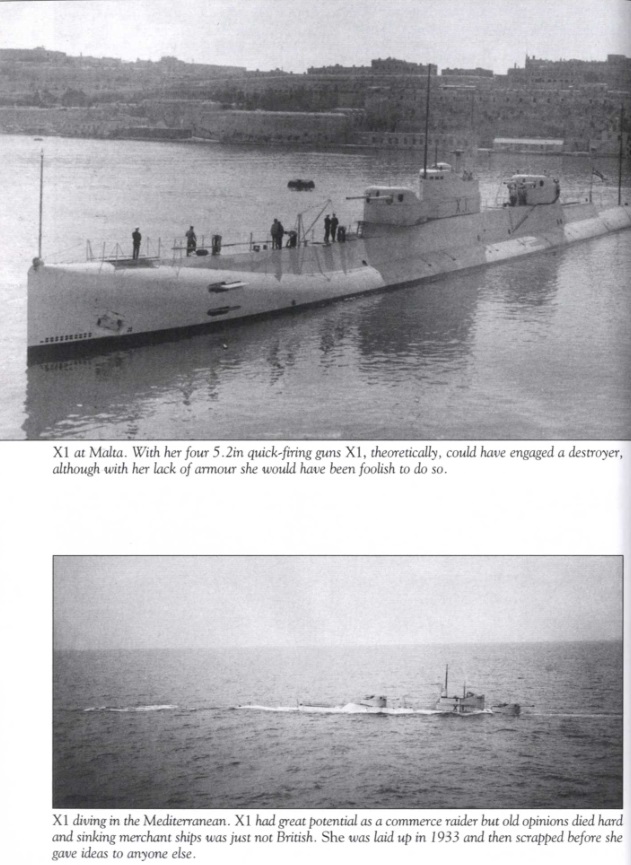
HMS X-1 Submarine-cruiser

When HMS X1 was launched, she was the largest submarine at
sea, 3,600 long tons (3,700 t) submerged. She became the only warship designed
and built for the Royal Navy after World War 1, to be scrapped before the start
of World War II.
Constructed with a double hull, the external tanks carried
most of the fuel, only 9% of the diesel being carried inside the pressure hull.
X1, by any standards was a very large submarine and the pressure hull was
divided into 10 separate watertight compartments.
Designed to attack any armed merchant ship by gun action
alone, it was decided a 5.2" calibre gun was required. These were
manufactured at Woolwich and two twin mounted guns were fitted. Each gun was
capable of firing 6 rounds per minute with a range of 17,288 yards.
To man both guns from the magazine to the firing control
took no less than 50 crew.
The two admiralty diesel engines, both built at Chatham,
were designed to produce 3,000 bhp each. The generators for charging the
batteries, were driven by two auxiliary diesel engines. These were MAN-type 6
cylinder engines which had been taken from U 126 after this German boat had
surrendered at the end of WW1.
Propulsion when submerged was supplied by four 600 bhp GEC
Electric Motors. Each shaft being driven by two motors. These motors were the
only part of the propulsion machinery that proved successful. Both the main and
auxiliary diesels were constantly faulty and were the main reason for X1 being
scrapped.
Following her commissioning, X1 sailed for trials. In 1926
she sailed for the Mediterranean where she remained until 1930. On her return
to the UK, X1 went into refit and in 1933 went into reserve. The razor blade
factory beckoned and the submarine was scrapped in December 1936, eleven years
after her commissioning.
X1 was the last submarine to have only a number until
numbering of submarines began again at the beginning of WWII.
Locomotives--Streamliner

Pre-war Type 386 Locomotive of the Czechoslovak State Railway
 Polish (ex-German) Pm3 steam locomotive in Warsaw.


'Lightweight' 2-cylinder 4-6-2 locomotive with add-on experimental streamlined casing
Deutsche Reichsbahn, 1930s
Deutsche Reichsbahn, 1930s
The first high-speed streamliner in Germany was the "Schienenzeppelin", an experimental propeller driven single car, built 1930. On 21 June 1931, it set a speed record of 230.2 km/h (143.0 mph) on a run between Berlin and Hamburg. In 1932 the propeller was removed and a hydraulic system installed. The Schienenzeppelin made 180 km/h (112 mph) in 1933.
The Schienenzeppelin led to the construction of the diesel-electric DRG Class SVT 877 "Flying Hamburger". This two-car train set had 98 seats and a top speed of 160 km/h (99 mph). During regular service starting on 15 May 1933, this train ran the 286 kilometres (178 mi) between Hamburg and Berlin in 138 minutes with an average speed of 124.4 km/h (77.3 mph). The SVT 877 was the prototype for the DRG Class SVT 137, first built in 1935 for use in the FDt express train service. During test drives, the SVT 137 "Bauart Leipzig" set a world speed record of 205 km/h (127 mph) in 1936. The fastest regular service with SVT 137 was between Hannover and Hamm with an average speed of 132.2 km/h (82.1 mph). This service lasted until 22 August 1939.
In 1935 Henschel & Son, a major manufacturer of steam locomotives, was able to upgrade its various steam locomotives to a high speed Streamliner type with a maximum speeds of up to 85 km/h (53 mph) by the addition of a removable shell over the old steam locomotive. The type was used on the Frankfurt am Main to Berlin route.
In the United Kingdom, development of streamlined passenger services began in 1934, with the Great Western Railway introducing relatively low-speed streamlined railcars, and the London and North Eastern Railway introducing the "Silver Jubilee" service using streamlined A4 class steam locomotives and full length trains rather than railcars. In 1938 on a test run, the locomotive Mallard built for this service broke the record for the fastest steam locomotive, reaching 126 mph (203 km/h). The London Midland and Scottish Railway introduced streamline locomotives of the Princess Coronation Class shortly before the outbreak of war.
The Ferrovie dello Stato (Italian railways) developed the FS Class ETR 200, a three-unit electric streamliner. The development started in 1934. These trains went into service in 1937. On 6 December 1937, an ETR 200 made a top speed of 201 km/h (125 mph) between Campoleone and Cisterna on the run Rome-Naples. In 1939 the ETR 212 even made 203 km/h (126 mph). The 219-kilometre (136 mi) journeys from Bologna to Milan were made in 77 minutes, meaning an average of 171 km/h (106 mph).
In the Netherlands, Nederlandse Spoorwegen introduced the Materieel 34 (DE3), a three unit 140 km/h (87 mph) streamlined diesel-electric trainset in 1934. An electric version, Materieel 36, went into service in 1936. From 1940 the "Dieselvijf" (DE5), a 160 km/h (99 mph) top speed five unit diesel-electric trainset based on DE3, completed the Dutch streamliner fleet. During test runs, a DE5 ran 175 km/h (109 mph). That year the similar electric Materieel 40 were first built.
In Czechoslovakia in 1934, Czechoslovak State Railways ordered two motor railcars with maximum speed 130 km/h (81 mph). The order was received by Tatra company, which was producing first streamlined mass-produced automobile Tatra 77 in that time. The railcar project was led by Tatra chief designer Hans Ledwinka and received streamlined design. Both ČSD Class M 290.0 were delivered in 1936 with desired 130 km/h (81 mph) maximum speed, although during test runs one car reached 148 km/h (92 mph) mark. They were run on Czechoslovak prominent route Prague-Bratislava under Slovenská strela (Slovak for "Slovak Arrow") brand.
Monday, April 4, 2016
Steam/Dieselpunk Pictures


The steam turbines are placed in the wing tips in order to do not disturb the recovery operations with turbulences and steam trails.
Power source are boilers that burn a powerful mixture of synthetic chemicals, and there is several large water tanks inside de fuselage.
The mothership is protected by the parasite fighter and by his own guns in remotely-controlled turrets.
Steam-powered mothership by CUTANGUS
Crimson Skies!
The Introduction to one of my most favorite games of all time, Crimson Skies! This is the PC version, which was had way more of a Sim feel to it then the Xbox. However, both are great games and I recommend them heartily.
The series is set within an alternate history of the 1930s invented by Weisman and McCoy. Within this divergent timeline, the United States has collapsed, and air travel has become the most popular mode of transportation in North America; as a result, air pirates thrive in the world of Crimson Skies. In describing the concept of Crimson Skies, Jordan Weisman stated he wanted to "take the idea of 16th century Caribbean piracy and translate into a 1930s American setting."
The Crimson Skies series takes place in an alternate 1930s in which the U.S. has broken apart into a number of independent nation-states. According to series creator Jordan Weisman:
I needed to create a geo-political situation that would result in air-pirates, so I looked at the real political situation that gave rise to the pirates of the Caribbean in the 16th and 17th centuries. We needed a balkanized era so that pirates could escape quickly into another countries territory, we needed things of value to be moved by air, and we needed a constantly churning political environment so that things did not settle down quickly. […] It took only three little changes in the history of the United States to get us the dynamic world of Crimson Skies.
This alternate timeline incorporates both fictional and actual historic events. According to the series' official backstory, the divergent timeline begins after World War I, when a "Regionalist movement" gains popularity in America following the Spanish influenza pandemic, rallying behind an isolationist platform. Meanwhile, President Wilson's authority was undercut when Prohibition failed as a constitutional amendment leaving the matter to be decided on the state level. The nation soon became polarized between "wet" and "dry" states and checkpoints became a common sight on state borders to stop the flow of alcohol into "dry" states. As the decade progressed, state governments seized more authority, encroaching into areas formerly the responsibility of the federal government, and formed regional power blocs.
The optimism of the Roaring Twenties was upset in 1927 when an outbreak of a deadly strain of influenza in America prompted states to close their borders, further dividing the Union. Though not as deadly as the 1918 pandemic, the epidemic had immense political fallout, bolstering regionalist "strong state" views and decreasing voter turnout in the 1928 elections. Shortly after the Wall Street Crash of 1929, Texas seceded from the United States, forming the Republic of Texas on January 1, 1930. New York was the next state to secede, and persuaded Pennsylvania and New Jersey to merge with it to form the Empire State. California followed suit, creating the Nation of Hollywood, as did Utah, which had already come in conflict with the federal government after the establishment of the Smith Law in 1928 that made Mormonism the state religion. Washington, D.C., essentially powerless, was unable to stop the country from falling apart. The federal government made its last stand against the "People's Revolt" of the bread basket states. When the US Army was defeated by the People's Collective (formerly the Midwest) forces in 1931, the fate of the United States was sealed, and the rest of the country dissolved into independent nations by the end of 1932 with the last legal remnant of the US being the neutral nation of Columbia in what used to be whatever area around Washington could be seized.
Though not directly affected by the Texas Secession, Canada found itself dragged down by the collapse of the U.S., with Quebec seceding in 1930 and the rest of the provinces siding with their nascent southern neighbors: New Brunswick and parts of Quebec joined the Maritime Provinces of Maine, New Hampshire, and Vermont; Newfoundland joined Quebec; Manitoba joined the People's Collective as did parts of Saskatchewan, with the Lakota nation laying claim to the rest; British Columbia merged with Oregon and Washington in Pacifica; and Alaska claimed the Yukon territories. The core of the former Canadian government established the Protectorate of Ontario. While Ottawa's authority technically extends to Alberta and the Northwest Territories, these areas are mostly no-man's land, while Nova Scotia and Prince Edward Island comprise a self-governing body, commonly referred to as the Northumberland Association.
In 1931, the Territorial Government of Hawaii was left defenseless in the wake of the fragmenting country and was overthrown in favor of the monarchy with Jonah Kūhiō as its king. Likewise, America's territorial holdings overseas were surrendered following the nation's formal collapse and the formation of the Federal Republic of Columbia on March 1, 1932.The resulting nation-states that formed were no longer unified—distrust between them strained diplomatic relations to the point that several small-scale wars broke out.
After the dissolution of the United States, the country's interstate railroad and highway systems fell into disrepair or were sabotaged as they crossed hostile borders. Consequently, ground-based vehicles such as the locomotive and automobile were replaced by aircraft such as the airplane and the zeppelin as the leading mode of transportation in North America. Europe soon followed this fascination with aviation to make its own strides into the new, aerially-dominated market. Gangs of air pirates formed in turn to plunder airborne commerce. Although air militias formed to counter the threat, rivalries between the nations of North America reduced their capacity to effectively address this issue, and even encouraged the countries to sponsor pirates as privateers so as to direct their illegal operations against opposing nations. In Europe, privateers and other mercenary groups have been adopted widely by nations who wish to avoid another world war, especially in the case of the Spanish Civil War.
By the end of 1937, North America is a "hotbed of conflict," with multiple pirate gangs and air militias battling for control of the skies. Europe is no better, as Germany jockeys for power while France and Britain look the other way. The Russian States continue to fight their civil war, which threatens to spill over into the Eastern European nations and Alaska. Asia, too, is on the brink, with Japan's recent invasion of China and the continuation of the bloody civil war in Australia.

Zeppelin Aircraft Carrier-Germany
Aircraft and technology
The planes of Crimson Skies are fictional designs created to fit within the Crimson Skies universe. Although some planes were modeled after actual 1930s era experimental aircraft and other "bizarre and outlandish designs" from the early years of aviation, they still take significant departures from conventional aviation design. Jordan Weisman has stated that the planes in Crimson Skies are designed to be the "hot rods of the air." According to IGN, "the planes in CS are built for style and not function with their redundant wing positions and rear propellers." For example, the Devastator aircraft features a pusher propeller and a biplane design.
Because of the history of the world of Crimson Skies, especially given that the nation-states of North America are constantly at war with one another and that air travel is the primary means of transportation, advancements in both aircraft and weaponry technology would have proceeded at a faster pace than had actually happened in the same time period. Zeppelins with hangar launch bays which can accommodate escort fighters are featured prominently in Crimson Skies; in actuality, only a few zeppelin-based airborne aircraft carriers saw service. Zeppelins in Crimson Skies are also armed with broadside cannons and are also heavily armored. Radio-controlled rockets are also available in the Crimson Skies universe, which can be controlled remotely after launch.
Other technologies are exclusive to the world of Crimson Skies. Magnetic rockets have the ability to track planes or weapon emplacements over a short distance. Aerial torpedoes are similar to sea-based torpedoes, but are specifically designed to take out airships. Beeper/seeker rockets are designed to work in tandem. The "beeper" rocket attaches to a target and emits a homing signal; the "seeker" rocket follows the homing signal, destroying the target. The Choker rocket disables the target's engine by bursting into a fireball that burns all oxygen around it. The Tesla cannon is a tesla coil-style weapon which fires a bolt of electricity at a target, disabling it. Also featured in Crimson Skies is the wind turbine, a weather control mechanism designed to generate storms.

Subscribe to:
Posts (Atom)