Read HG Wells War Of The Worlds Issue 1 online | Read HG Wells War Of The Worlds online | Read Comic Books Online Free
HG Wells War Of The Worlds Issue 1, HG Wells War Of The Worlds, free HG Wells War Of The Worlds Issue 1 comics, Readcomicbooksonline.com is the only place to read scans of HG Wells War Of The Worlds Issue 1 of the comic HG Wells War Of The Worlds online.
Early and mainly pre-WWII technology, archaic throwbacks like RAF aircraft and Soviet monster-tanks, with a spice of War of the Worlds.
Tuesday, November 15, 2016
Read HG Wells War Of The Worlds Issue 1 online
Saturday, November 12, 2016
The Massacre of Mankind
It has been 14 years since the Martians invaded England. The world has moved on, always watching the skies but content that we know how to defeat the Martian menace. Machinery looted from the abandoned capsules and war-machines has led to technological leaps forward. The Martians are vulnerable to earth germs. The Army is prepared.
So when the signs of launches on Mars are seen, there seems little reason to worry. Unless you listen to one man, Walter Jenkins, the narrator of Wells' book. He is sure that the Martians have learned, adapted, understood their defeat.
He is right.
Thrust into the chaos of a new invasion, a journalist - sister-in-law to Walter Jenkins - must survive, escape and report on the war.
The Massacre of Mankind has begun
#
The Martians are marshalling a fresh invasion force – and this time they’ve learnt from their mistakes. A newly-written sequel to H.G. Wells’ The War of the Worlds, published 118 years after the original story, will join the catalogue of classic fiction given fresh life by contemporary authors.
Publishers Gollancz announced that Stephen Baxter, an award-winning author who has collaborated with Terry Pratchett, has been chosen to write a new sequel to one of the most influential science fictions works ever published.
First published in 1897, The War of the Worlds has spawned half a dozen feature films, a famous Orson Welles radio drama which created a national panic in the US and a hit record album and stage production adapted by Jeff Wayne.
Baxter promises that his sequel, The Massacre of Mankind, will tell an equally terrifying tale. Set in late 1920s London, the Martians return, and the war begins again. But the aliens do not repeat the mistakes of their last invasion. They know their vulnerability to microbial infections caused their demise last time. They target Britain first, since this nation led the resistance but “the massacre of mankind has begun.”
Wednesday, October 19, 2016
War of the Worlds - Wikia
War of the Worlds
War of the Worlds - Number of Articles: 190, Number of Pages: 864, Number of Media Files: 194
Friday, August 5, 2016
The Robot Tanks of WWII, Both Real and Imagined
In the mid-1930s, sci-fi legend Hugo Gernsback predicted that manned flame tanks would one day become a reality. A decade later, Gernsback would revisit his prediction with one important twist-the flame tanks of tomorrow would drive themselves.
The Horrifying Flame Tank of the 1930s Meant to End All Wars
In 1936, Hugo Gernsback proposed a terrifying new war machine meant to be more efficient than any that had come before it. He called it the "flame tank." And while the thing looks absolutely horrifying in every way (those appear to be dozens of people being burned alive by the tank's flame guns), the stated goal of Gernsback's machine of death was actually to make war less brutal.
Sunday, June 12, 2016
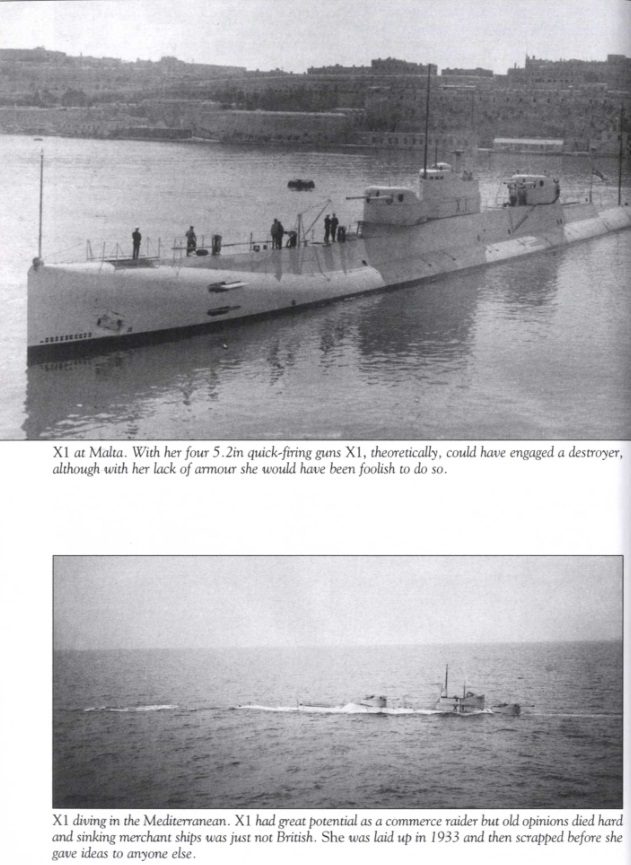
HMS X-1 Submarine-cruiser
When HMS X1 was launched, she was the largest submarine at
sea, 3,600 long tons (3,700 t) submerged. She became the only warship designed
and built for the Royal Navy after World War 1, to be scrapped before the start
of World War II.
Constructed with a double hull, the external tanks carried
most of the fuel, only 9% of the diesel being carried inside the pressure hull.
X1, by any standards was a very large submarine and the pressure hull was
divided into 10 separate watertight compartments.
Designed to attack any armed merchant ship by gun action
alone, it was decided a 5.2" calibre gun was required. These were
manufactured at Woolwich and two twin mounted guns were fitted. Each gun was
capable of firing 6 rounds per minute with a range of 17,288 yards.
To man both guns from the magazine to the firing control
took no less than 50 crew.
The two admiralty diesel engines, both built at Chatham,
were designed to produce 3,000 bhp each. The generators for charging the
batteries, were driven by two auxiliary diesel engines. These were MAN-type 6
cylinder engines which had been taken from U 126 after this German boat had
surrendered at the end of WW1.
Propulsion when submerged was supplied by four 600 bhp GEC
Electric Motors. Each shaft being driven by two motors. These motors were the
only part of the propulsion machinery that proved successful. Both the main and
auxiliary diesels were constantly faulty and were the main reason for X1 being
scrapped.
Following her commissioning, X1 sailed for trials. In 1926
she sailed for the Mediterranean where she remained until 1930. On her return
to the UK, X1 went into refit and in 1933 went into reserve. The razor blade
factory beckoned and the submarine was scrapped in December 1936, eleven years
after her commissioning.
X1 was the last submarine to have only a number until
numbering of submarines began again at the beginning of WWII.
Locomotives--Streamliner
Pre-war Type 386 Locomotive of the Czechoslovak State Railway
Polish (ex-German) Pm3 steam locomotive in Warsaw.
'Lightweight' 2-cylinder 4-6-2 locomotive with add-on experimental streamlined casing
Deutsche Reichsbahn, 1930s
The first high-speed streamliner in Germany was the "Schienenzeppelin", an experimental propeller driven single car, built 1930. On 21 June 1931, it set a speed record of 230.2 km/h (143.0 mph) on a run between Berlin and Hamburg. In 1932 the propeller was removed and a hydraulic system installed. The Schienenzeppelin made 180 km/h (112 mph) in 1933.
The Schienenzeppelin led to the construction of the diesel-electric DRG Class SVT 877 "Flying Hamburger". This two-car train set had 98 seats and a top speed of 160 km/h (99 mph). During regular service starting on 15 May 1933, this train ran the 286 kilometres (178 mi) between Hamburg and Berlin in 138 minutes with an average speed of 124.4 km/h (77.3 mph). The SVT 877 was the prototype for the DRG Class SVT 137, first built in 1935 for use in the FDt express train service. During test drives, the SVT 137 "Bauart Leipzig" set a world speed record of 205 km/h (127 mph) in 1936. The fastest regular service with SVT 137 was between Hannover and Hamm with an average speed of 132.2 km/h (82.1 mph). This service lasted until 22 August 1939.
In 1935 Henschel & Son, a major manufacturer of steam locomotives, was able to upgrade its various steam locomotives to a high speed Streamliner type with a maximum speeds of up to 85 km/h (53 mph) by the addition of a removable shell over the old steam locomotive. The type was used on the Frankfurt am Main to Berlin route.
In the United Kingdom, development of streamlined passenger services began in 1934, with the Great Western Railway introducing relatively low-speed streamlined railcars, and the London and North Eastern Railway introducing the "Silver Jubilee" service using streamlined A4 class steam locomotives and full length trains rather than railcars. In 1938 on a test run, the locomotive Mallard built for this service broke the record for the fastest steam locomotive, reaching 126 mph (203 km/h). The London Midland and Scottish Railway introduced streamline locomotives of the Princess Coronation Class shortly before the outbreak of war.
The Ferrovie dello Stato (Italian railways) developed the FS Class ETR 200, a three-unit electric streamliner. The development started in 1934. These trains went into service in 1937. On 6 December 1937, an ETR 200 made a top speed of 201 km/h (125 mph) between Campoleone and Cisterna on the run Rome-Naples. In 1939 the ETR 212 even made 203 km/h (126 mph). The 219-kilometre (136 mi) journeys from Bologna to Milan were made in 77 minutes, meaning an average of 171 km/h (106 mph).
In the Netherlands, Nederlandse Spoorwegen introduced the Materieel 34 (DE3), a three unit 140 km/h (87 mph) streamlined diesel-electric trainset in 1934. An electric version, Materieel 36, went into service in 1936. From 1940 the "Dieselvijf" (DE5), a 160 km/h (99 mph) top speed five unit diesel-electric trainset based on DE3, completed the Dutch streamliner fleet. During test runs, a DE5 ran 175 km/h (109 mph). That year the similar electric Materieel 40 were first built.
In Czechoslovakia in 1934, Czechoslovak State Railways ordered two motor railcars with maximum speed 130 km/h (81 mph). The order was received by Tatra company, which was producing first streamlined mass-produced automobile Tatra 77 in that time. The railcar project was led by Tatra chief designer Hans Ledwinka and received streamlined design. Both ČSD Class M 290.0 were delivered in 1936 with desired 130 km/h (81 mph) maximum speed, although during test runs one car reached 148 km/h (92 mph) mark. They were run on Czechoslovak prominent route Prague-Bratislava under Slovenská strela (Slovak for "Slovak Arrow") brand.
Subscribe to:
Posts (Atom)